TL;DR
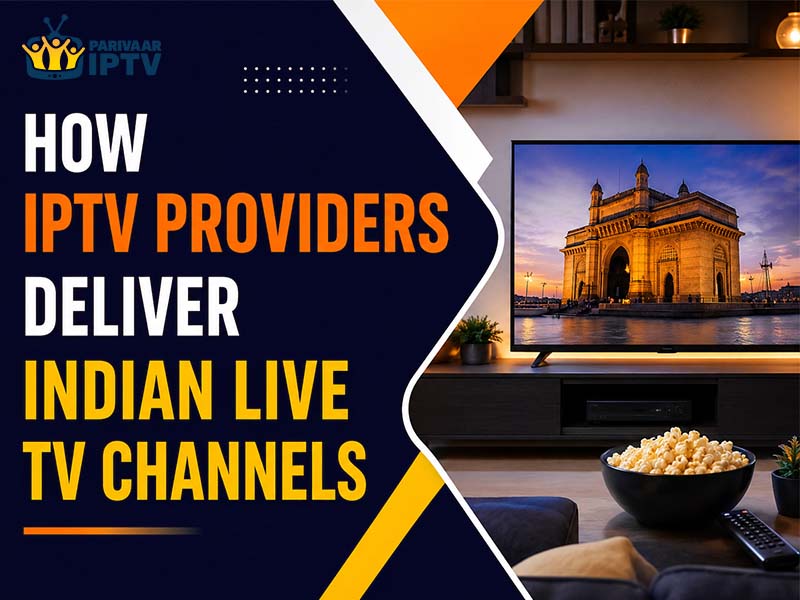
IPTV providers deliver Indian live TV using internet streaming instead of cable or satellite. They collect live channels from broadcasters, encode them into digital streams, and send them through servers to users. You watch them on an IPTV box, smart TV, or app. It works for regional content like Hindi, Tamil, Telugu IPTV, and more. Everything runs over internet protocols.
Indian TV is now easy to watch anywhere in the world. You don’t need cable anymore. You don’t even need a satellite dish. This is all possible because of IPTV providers. They bring live Indian TV channels to your screen using the internet. You just need a stable connection and a device like an IPTV box or smart TV. In this blog, we will break down how it actually works. Simple and clear.
What is IPTV in Simple Words?
IPTV means Internet Protocol Television. It is TV delivered through the internet instead of traditional methods. Old TV setup requires:
- Cable wires or satellite dish
- Fixed channel packs
- Limited flexibility
IPTV setup needs:
- Internet connection
- Streaming servers
- On-demand and live channels
With IPTV, you can watch Indian channels anywhere. You are not tied to one country or cable network. That is why IPTV service providers are growing fast worldwide.
How IPTV Providers Get Indian TV Channels?
This is the part most people don’t see. Providers don’t “create” channels. They collect and distribute them. Here is how it works in simple steps.
1. Channel sourcing
First, IPTV providers source Indian TV channels. These can include:
- News channels
- Movies and entertainment channels
- Regional channels like Telugu IPTV content
They take these feeds from broadcasters or licensed sources. Each channel is a live broadcast stream.
2. Signal capture and encoding
Live TV signals are not ready for internet use directly. So providers convert them. They use encoding systems to:
- Compress video
- Reduce bandwidth usage
- Keep quality stable
This process turns raw TV signals into digital streams. This step is important. Without it, streaming would be slow and unstable.
3. Streaming servers
Once channels are encoded, they are sent to servers. These servers are like distribution hubs. They:
- Store live feeds temporarily
- Handle thousands of viewers at once
- Balance traffic load
Good IPTV services use multiple servers across regions. This helps avoid buffering during peak hours like live sports or news.
4. Content delivery over internet
Now comes the main step. The IPTV system sends the video using internet protocols. This is where IPTV is different from cable TV. Instead of broadcasting one signal to everyone, IPTV sends data packets to each user individually. So every viewer gets a personal stream. This is why you can:
- Pause live TV (in some cases)
- Switch channels instantly
- Watch on multiple devices
5. Device connection (Set-top box or app)
To watch IPTV, users need a device. Most common options:
- IPTV box
- Smart TV app
- Mobile app
- Firestick or Android box
An IPTV set top box is popular because it is simple. You connect it to your TV and internet. Then you log in and start watching. No technical setup needed.
Why Indian Channels Work Well on IPTV?
Indian TV has a huge variety and that makes IPTV perfect for it. You get:
- Multiple languages
- Regional content
- 24/7 entertainment
- Live news from India
- Movie channels
- Religious channels
This is where IPTV Indian channels become important. People living outside India especially rely on IPTV to stay connected.
Read More – https://parivaariptv.com/blog/watch-telugu-iptv-channels/
Regional content like Telugu IPTV
One strong example is regional streaming. Many users look for Telugu IPTV content specifically. Why?
- Local language entertainment
- Regional movies and serials
- News from home state
- Cultural programs
IPTV service providers group these channels into categories. So users can easily switch between languages like:
- Hindi channels
- Punjabi shows
- Tamil movies
- Telugu news
- Malayalam films
- Bengali shows
This flexibility is one of IPTV’s biggest strengths.
How IPTV Service Providers Maintain Quality Streaming?
Good streaming is not luck. It is system-based. Here is what IPTV companies do behind the scenes.
1. High-speed servers
Servers must handle thousands of users at once. If servers are weak, streaming breaks. That is why strong streaming TV services invest in:
- Cloud servers
- Load balancing
- Backup servers
2. Adaptive streaming
Internet speeds are not always stable. So IPTV systems adjust video quality automatically. If your internet slows down:
- Video quality drops slightly
- Streaming continues without stopping
When the internet improves, quality goes back up. This is called adaptive bitrate streaming.
3. Content caching
Popular channels are cached. That means:
- Frequently watched streams are stored closer to users
- Load time becomes faster
- Buffering reduces
4. Continuous monitoring
IPTV services monitor streams 24/7. If a channel goes down:
- It is fixed quickly
- Backup feed is activated
This keeps live TV stable.
Role of IPTV Box in Streaming Indian Channels
An IPTV box is one of the most used devices. It acts like a bridge between the internet and TV. Here is a simple breakdown:
- Internet brings data
- IPTV set top box processes it and then
- TV displays it
Why do people prefer IPTV boxes?
- Easy setup
- Smooth interface
- Works with remote control
- Supports HD and 4K streaming
- Stable performance compared to some apps
For Indian households abroad, it feels similar to normal TV.
Advantages of IPTV Platforms for Indian Content
There are many reasons IPTV is popular now. Let’s look at simple benefits.
1. Wide channel access
You get hundreds or even thousands of channels. No physical cable limits.
2. Language flexibility
Watch content in different Indian languages easily. From Hindi to Telugu channels, everything is available in one place.
3. Portability
You can watch anywhere:
- Home
- Travel
- Different countries
Only the internet is needed.
4. Device freedom
You are not stuck with one device. You can use:
- IPTV streaming box
- Phone
- Laptop
- Smart TV
5. Better control
You choose what to watch. No fixed schedule like old cable TV.
Challenges IPTV Streaming Providers Handle
It is not always simple. IPTV streaming platforms deal with challenges like:
- Internet speed differences
- Server load during live events
- Channel stability
- Regional content updates
To solve this, they keep upgrading infrastructure. Good providers focus heavily on uptime and smooth playback.
Read More – https://parivaariptv.com/blog/best-iptv-free-trial-usa-parivaar-iptv-2026/
Future of IPTV Indian Channels
IPTV is growing fast. Future improvements will include:
- Better 4K and 8K streaming
- More regional content
- Faster servers
- Smarter recommendations
- Lower buffering time
Indian content demand is also increasing globally. So IPTV services will keep expanding.
Why Parivaar IPTV Fits This System?
Parivaar IPTV follows the same modern IPTV structure. It focuses on:
- Smooth live TV delivery
- Indian channel variety
- Regional access including Telugu IPTV content
- Compatibility with TV streaming device and smart devices
The goal is simple. Make Indian TV easy to watch anywhere.
Conclusion
IPTV has changed how Indian TV is delivered. Everything runs through internet systems now. IPTV providers collect live channels, process them, and deliver them through powerful servers to your screen. You just need an internet connection and a device. That’s it. No cables. No dish. No limits. And with regional support like Telugu IPTV and other Indian channels, users can stay connected to home from anywhere in the world.